Bllastt: The Display Font That Gives Your Designs a Distinctive, Human Touch
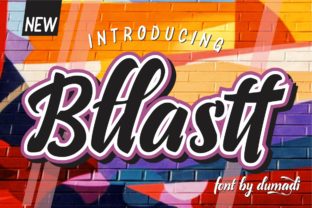
When you're designing a brand identity, launching a creative campaign, or crafting a memorable digital experience, typography isn’t just about legibility—it’s about voice. It’s how your audience feels before they even read a word. That’s where Bllastt stands apart: it’s not another neutral sans-serif or predictable script font. Bllastt is a thoughtfully crafted display font designed to inject personality, warmth, and intentionality into visual communication. Whether you’re a graphic designer, marketing professional, startup founder, or educator building a presentation, Bllastt offers a rare balance—distinctive enough to command attention, yet refined enough to support clarity and credibility.
Why Designers and Communicators Struggle With “Generic” Typography
Many professionals face the same quiet frustration: their work looks polished—but forgettable. Logos blend in. Social posts scroll past unnoticed. Presentations feel safe, not inspiring. This isn’t usually a failure of concept or strategy—it’s often a typography mismatch. Standard system fonts or overused web typefaces lack emotional resonance. They don’t reflect individuality, craft, or cultural nuance. And when every competitor uses similar fonts, differentiation evaporates.
At the same time, users need practicality. A striking font must still perform well across devices, scale gracefully in headings and hero banners, and pair intuitively with body text. That’s why many avoid expressive type altogether—defaulting to safety instead of impact. But safety rarely builds recognition. What’s needed is a display font that bridges expression and execution—and that’s exactly what Bllastt delivers.
How Bllastt Solves Real Design Challenges
Bllastt was built for purpose—not just aesthetics. Its letterforms combine subtle geometric structure with organic rhythm: rounded terminals, gentle contrast in stroke weight, and open counters that improve readability at larger sizes. Unlike overly decorative fonts that sacrifice function, Bllastt maintains strong visual hierarchy without demanding excessive attention. It doesn’t shout—it invites.
This makes Bllastt ideal for situations where tone matters as much as content:
- Brand launch or repositioning—Bllastt helps establish a confident, approachable identity without leaning into clichéd “handwritten” tropes.
- Digital campaigns and social visuals—Its balanced proportions render cleanly on mobile screens, while its distinctive ‘g’, ‘a’, and ‘y’ add memorability to static ads and carousels.
- Presentation titles and keynote slides—When paired with a clean sans-serif body (like Inter or Lato), Bllastt creates immediate visual distinction—guiding focus without distracting from key messages.
- Editorial features and magazine covers—Designers report that Bllastt adds editorial sophistication to lifestyle, culture, or education-focused publications—especially when used at 48pt and above.
Practical Tips for Using Bllastt Effectively
Like any powerful tool, Bllastt works best when applied intentionally—not everywhere, but where it counts. Here’s how thoughtful users get consistent, professional results:
- Reserve it for display use only. Bllastt shines in headlines, logos, posters, and short quotes—not paragraphs or UI labels. Use it where readers pause, not skim.
- Pair it wisely. Its friendly geometry pairs naturally with humanist sans-serifs (e.g., Manrope, Work Sans) or low-contrast serifs (IBM Plex Serif). Avoid clashing high-contrast or ultra-thin companions.
- Optimize spacing. Bllastt benefits from slightly increased letter-spacing in all-caps settings (20–40 units in design tools) and generous line-height in large-format applications.
- Test contrast and size early. While highly legible, Bllastt performs best at 36pt and up on screen and 24pt+ in print. Always preview on target devices—not just desktop.
Different Users, Different Needs—Same Font, Smarter Application
How you use Bllastt depends less on your title and more on your goals:
For freelance designers: Bllastt becomes a subtle signature—a way to elevate client work without imposing personal style. One designer told us they now use Bllastt as a “tone anchor” in mood boards, helping clients articulate preferences faster than abstract adjectives like “modern” or “friendly.”
For small business owners: You don’t need a full branding suite to stand out. A single Bllastt-powered logo lockup or Instagram story banner can shift perception—making your offering feel more considered and human-centered. No design degree required.
For educators and nonprofit communicators: Bllastt supports accessibility through clarity and familiarity—not novelty. Its open shapes and generous x-height aid comprehension, especially in multilingual or intergenerational contexts. Several literacy programs now use Bllastt in workshop materials for its balance of warmth and structure.
What to Keep in Mind Before You Implement
While Bllastt is versatile, it’s not universal—and that’s intentional. It’s not suited for dense UI navigation, data tables, or long-form body copy. It also thrives in environments where brand confidence aligns with creative authenticity. If your industry demands strict traditionalism (e.g., certain legal or financial sectors), Bllastt may serve better as an accent than a primary identifier.
Licensing is straightforward: Bllastt is available for both web and desktop use under clear, scalable plans—including free trial options. And because it’s optimized for modern rendering engines, it loads quickly and displays consistently across Chrome, Safari, Firefox, and Edge—no fallback gymnastics required.
Final Thought: Typography as Intentional Communication
In a world saturated with visual noise, choosing a font is never neutral. Every typeface carries assumptions, associations, and expectations. Bllastt rejects the idea that personality must come at the expense of professionalism—or that clarity requires sacrificing character. It meets designers and communicators where they are: seeking tools that help them express ideas with sincerity, stand out without shouting, and connect with audiences on a human level.
If your current typography feels like background noise rather than a meaningful part of your message, consider Bllastt not as decoration—but as deliberate, functional expression. Try it in your next headline. Test it against your brand voice. See how it changes the weight—and warmth—of your work. Because great design doesn’t just look good. It feels like it was made for someone.