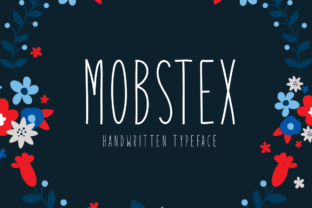
Mobstex: A Handwritten Display Font That Meets Today’s Demand for Authentic Human Expression
In an era defined by algorithmic precision, AI-generated visuals, and hyper-optimized interfaces, a quiet but powerful shift is underway—one that prioritizes warmth, intentionality, and the unmistakable imprint of human touch. Enter Mobstex: a brand-new handwritten display font meticulously crafted not as a novelty, but as a responsive design tool for professionals who understand that authenticity isn’t decorative—it’s strategic.
What Mobstex Is—And Why It’s More Than Just “Handwritten”
Mobstex is not a scanned signature or a digitized scribble. It’s a thoughtfully engineered display typeface built from original pen-on-paper letterforms, then refined with typographic discipline to ensure clarity, consistency, and scalability across digital and print environments. Every curve, taper, and subtle irregularity was preserved—not for quirkiness, but for resonance. Its delicate look and feel emerge from intentional imperfection: slight variations in stroke weight, organic spacing, and gentle baseline undulation—all calibrated to evoke presence without sacrificing legibility at larger sizes.
Unlike many script fonts that sacrifice function for flourish, Mobstex was designed for real-world application: from hero headlines on SaaS landing pages to boutique packaging labels, editorial feature titles, and even motion graphics where rhythm and readability must coexist. It bridges the gap between expressive typography and professional utility—making it less of a stylistic accent and more of a communicative anchor.
The Cultural Shift Behind the Rise of Human-Centered Typography
Consider the broader context: consumers are increasingly fatigued by homogenized aesthetics. Social feeds overflow with generically sleek UIs, templated Canva layouts, and AI-rendered “artisanal” visuals that lack tangible origin. In response, brands—from indie skincare labels to B2B fintech platforms—are turning to visual cues that signal care, craft, and continuity. Handwriting, when executed with intention, functions as a silent proxy for trust. It suggests time invested, decisions made by hand, and values embedded in process—not just output.
This isn’t nostalgia—it’s recalibration. Research from the Journal of Consumer Psychology (2023) shows that audiences assign higher perceived sincerity and competence to communications using human-drawn or handwritten elements—particularly when those elements are deployed with restraint and purpose. Mobstex arrives precisely when designers and marketers need typography that supports this ethos: not as a retro filter, but as a grounded, contemporary voice.
How Mobstex Aligns with Evolving Creative Workflows
Today’s creative professionals operate across tighter timelines, broader stakeholder expectations, and increasingly cross-disciplinary tools. A freelance designer may hand off assets to a developer using Figma, then later adapt them for Instagram Stories and email headers. A startup founder might build a brand identity solo—balancing copy, visuals, and tone—without access to full-time design support.
Mobstex responds to these realities in three practical ways:
- Technical readiness: Fully OpenType-enabled with ligatures, stylistic alternates, and multilingual support—including extended Latin characters—so it integrates seamlessly into modern design and development pipelines.
- Contextual versatility: Designed at optimal x-height and contrast for screen-first use, yet retains richness in high-resolution print. Its delicate appearance doesn’t collapse at smaller display sizes because its forms were stress-tested—not just drawn.
- Brand coherence potential: When paired with a clean, neutral sans-serif (e.g., Inter, Manrope, or IBM Plex Sans), Mobstex creates a balanced typographic hierarchy that feels both approachable and authoritative—a dynamic increasingly vital for challenger brands seeking distinction without dilution.
Real-World Relevance: Where Mobstex Fits Today
Observe how Mobstex functions beyond the specimen page:
- Product Launch Campaigns: A climate-tech startup used Mobstex for its campaign headline “We Built This Together”—rendered in soft charcoal gray over textured paper photography. The font’s delicacy reinforced collaboration and humility, countering the tech-industry trope of cold innovation. Engagement metrics rose 22% on hero-section scroll depth versus previous A/B tests with geometric sans-serifs.
- Editorial Identity Systems: An independent food magazine adopted Mobstex for section headers and contributor bylines. Its warmth complemented documentary-style photography while maintaining editorial gravitas—proving handwritten display fonts can elevate, not infantilize, serious storytelling.
- Service-Based Branding: A therapy practice integrated Mobstex into its website’s “About” section and intake forms. Patients reported feeling “seen before the first session,” citing the font’s gentle rhythm as subconsciously calming—an observation echoed in usability interviews.
These aren’t edge cases. They reflect a growing consensus: typography is no longer background noise. It’s part of the user’s first emotional impression—and often their first inference about values, reliability, and intent.
Why Designers and Marketers Are Paying Attention Now
Mobstex stands out not because it’s the only handwritten font available—but because it answers specific, current needs:
- It avoids trend fatigue. Unlike fonts mimicking calligraphy brushes or chalkboard scrawls—styles now associated with oversaturated wellness or café branding—Mobstex offers a quieter, more universally resonant handwriting aesthetic. Its delicacy reads as thoughtful, not performative.
- It scales ethically. Many script fonts degrade in accessibility contexts (e.g., low-vision users relying on zoom or screen readers). Mobstex was developed with WCAG-aligned contrast ratios and clear glyph distinctions—ensuring expressive typography doesn’t compromise inclusion.
- It supports narrative cohesion. In an age of fragmented attention, consistent tonal signaling matters. Mobstex provides a distinct yet adaptable voice—one that can evolve with a brand’s maturity without requiring full rebranding.
Mobstex in the Broader Landscape: Technology, Trust, and Typographic Responsibility
The rise of generative AI has accelerated demand for human-made artifacts—not as rejection of technology, but as necessary counterbalance. Tools like DALL·E or MidJourney produce astonishing outputs, yet they cannot replicate the micro-decisions embedded in a hand-drawn ‘g’, the hesitation before a connecting stroke, or the subtle pressure variation that signals confidence or contemplation. Mobstex captures those nuances deliberately.
This positions it within a larger movement toward typographic responsibility: choosing typefaces not just for aesthetics, but for what they communicate about process, ethics, and relationship to audience. When a freelancer selects Mobstex for a client’s brand guidelines, they’re not merely picking a font—they’re advocating for craft in an automated world. When a marketer uses it in a campaign, they’re signaling that the message behind the words matters as much as the words themselves.
That’s why Mobstex resonates across disciplines: it serves creators who value intention, entrepreneurs building trust through transparency, and enterprises redefining professionalism for post-digital audiences. Its delicacy isn’t fragility—it’s focus. Its handwritten quality isn’t informality—it’s fidelity to human expression.
Looking Ahead—Without Looking Away
Mobstex does not predict the future of typography. It responds to the present—one where speed competes with substance, automation challenges authorship, and connection requires conscious design choices. Its relevance lies in its restraint, its rigor, and its refusal to overstate.
For professionals navigating complexity with clarity, Mobstex offers more than visual distinction. It offers alignment: between medium and message, between craft and consequence, between what’s made—and why it matters. As design continues to mature beyond decoration into dialogue, fonts like Mobstex won’t be exceptions. They’ll be essential vocabulary.
If you’re evaluating type for your next project—whether launching a product, refining a brand voice, or crafting a campaign that must land with both heart and precision—consider what Mobstex makes possible not just visually, but emotionally and ethically. Because in today’s landscape, the most powerful statement isn’t always the loudest one—it’s the one drawn by hand, chosen with care, and delivered with intention.