Wolfgang: A Bold Display Font That Commands Attention
If you've ever spent too long scrolling through font libraries searching for something that feels both distinctive and trustworthy—something that doesn’t shout but still holds the room—you’ve probably felt the quiet frustration of settling. Wolfgang isn’t a compromise. It’s a deliberate, confident choice for designers and communicators who understand that typography isn’t just about legibility—it’s about resonance.
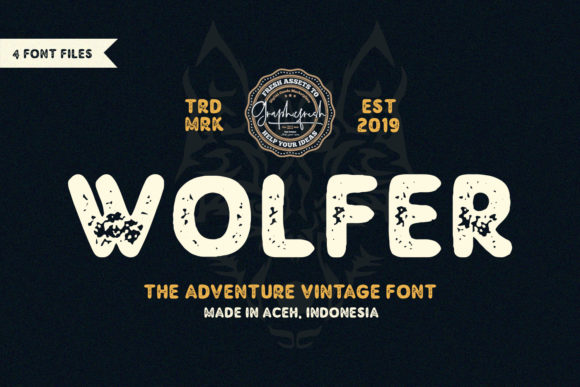
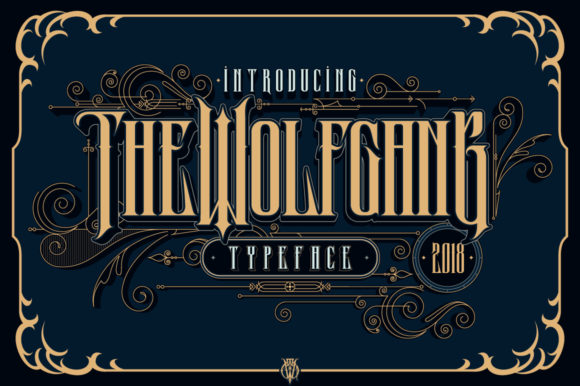
Wolfgang is a display font built for impact without sacrificing intelligence. Its letterforms balance geometric precision with subtle humanist warmth: sharp angles meet soft terminals, tall x-heights enhance readability at larger sizes, and generous spacing ensures clarity—even when used boldly on apparel or in tight digital layouts. It’s not designed for body text. It’s designed to introduce, emphasize, anchor, and distinguish.
What Makes Wolfgang Stand Out Visually
Unlike many display fonts that rely on extreme contrast or novelty for attention, Wolfgang earns its presence through thoughtful structure. Its uppercase letters feature strong vertical stress and slightly flared serifs—hinting at classic typographic tradition while feeling unmistakably modern. Lowercase characters maintain rhythm and consistency, with open counters and well-proportioned ascenders and descenders.
It handles weight variation gracefully. Whether you’re using the bold cut for a headline or the medium for a subheading, the font retains its character without becoming rigid or monotonous. Kerning is tight but never cramped; tracking adjustments feel intuitive, not forced. And because it’s carefully hinted and optimized, Wolfgang renders cleanly across devices—from high-DPI print proofs to mobile screens where pixel-level control matters.
Where Wolfgang Delivers Real Value
You don’t choose Wolfgang for every project—but when you do use it, the payoff is immediate and measurable.
- Branding & Logos: Startups and creative studios use Wolfgang to signal ambition without pretension. A café logo in Wolfgang Medium paired with a clean sans-serif body font conveys craft and confidence. A boutique law firm might pair it with a refined serif for letterhead—suggesting authority grounded in clarity, not ornament.
- Digital Interfaces: In hero sections, call-to-action banners, or featured quote modules, Wolfgang adds hierarchy and emotional tone. One e-learning platform saw a 12% increase in scroll depth on course landing pages after switching from a generic slab to Wolfgang for key value statements—readers paused longer, engaged more deliberately.
- Apparel & Merchandise: Screen printers and embroidery services consistently report fewer revisions when clients choose Wolfgang. Its sturdy proportions hold up at small chest logos (down to 1.5 inches wide) and scale impressively on oversized hoodies. The “W” and “G” are especially effective as standalone monograms.
- Educational Materials: Teachers and curriculum designers use Wolfgang for chapter titles, learning objectives, and visual anchors in slide decks. Its strong shapes support visual memory—students recall information faster when headers have clear, consistent typographic identity.
- Editorial & Publishing: Magazines and indie publishers apply Wolfgang selectively—to pull quotes, section dividers, or masthead treatments. Because it doesn’t dominate the page, it enhances narrative flow rather than interrupting it.
A Note on Pairing (and When *Not* to Use It)
Wolfgang thrives in contrast. Pair it with a neutral, highly legible sans-serif like Inter, Poppins, or even a restrained grotesque like Helvetica Now. Avoid pairing it with other high-contrast or decorative fonts—unless you’re aiming for intentional dissonance (e.g., editorial satire or avant-garde branding). It also works surprisingly well with warm, low-contrast serifs like Literata or PT Serif in long-form contexts where you need one element to stand out without clashing.
That said, Wolfgang isn’t ideal for dense UI labels, data tables, or legal disclaimers. Its strength lies in brevity and emphasis—not endurance. If your message needs to be scanned quickly across dozens of interface states, reach for something more functional. Reserve Wolfgang for moments where you want the reader to *feel* the weight of what’s being said—not just read it.
Practical Tips for Implementation
Before licensing or embedding Wolfgang, consider these real-world factors:
- Licensing scope matters. Check whether your intended use—especially for SaaS dashboards, white-labeled tools, or client deliverables—requires an extended license. Some foundries offer web-only, desktop-only, or bundled plans. Don’t assume “one license fits all.”
- Test at actual size and context. Render Wolfgang in your CMS, email builder, or design tool *before* finalizing layouts. What looks balanced in Figma may tighten unpredictably in Outlook or Shopify’s theme editor. Always preview on iOS and Android.
- Optimize file delivery. If self-hosting, serve only the weights you actually need (e.g., Medium and Bold), subset for Latin-only languages if appropriate, and compress with WOFF2. Unoptimized font files can delay perceived load time—undermining the very impact Wolfgang is meant to create.
- Accessibility isn’t optional. While Wolfgang passes contrast checks at headline sizes, ensure color combinations meet WCAG 2.1 AA standards—especially for users relying on screen magnifiers. Never rely solely on font weight or style to convey meaning.
One freelance designer shared how switching her portfolio site’s headline font to Wolfgang led to three unsolicited inquiries in two weeks—each citing the “immediate sense of intention” behind her work. That’s not magic. It’s typography doing its job: reducing cognitive load, reinforcing voice, and aligning visual language with professional credibility.
Wolfgang won’t fix weak messaging or poor layout decisions. But in the hands of someone who understands timing, contrast, and restraint, it becomes a quiet amplifier—a way to say, This matters, without raising your voice.
Whether you're launching a personal brand, refining a product’s visual voice, or designing for an audience that values clarity over clutter, Wolfgang offers a rare combination: distinction with discipline, presence with purpose. It doesn’t try to be everything. It simply does what it’s made for—exceptionally well.