Bvas Estadas
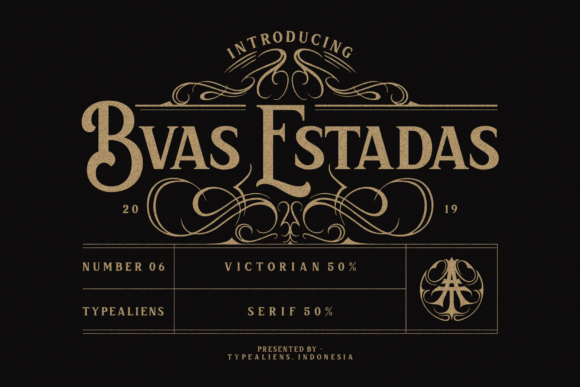
Bvas Estadas is more than a display font—it’s a deliberate visual signal. With its bold, high-contrast letterforms and vintage sensibility, it carries weight, presence, and quiet authority. It doesn’t whisper; it anchors. That makes it unusually strategic for professionals who understand that typography isn’t decoration—it’s decision-making made visible.
Why Bvas Estadas Fits Real-World Strategy
Most display fonts either shout or fade. Bvas Estadas does neither. Its structure balances architectural precision with subtle human irregularity—slight variations in stroke weight, softened terminals, and confident spacing lend it authenticity without sacrificing legibility at scale. That duality matters: it supports clarity while inviting attention. For entrepreneurs launching a premium product line, educators designing course materials with gravitas, or publishers crafting limited-edition covers, Bvas Estadas functions as a silent co-author—one that reinforces intention rather than competing with content.
Unlike trend-driven typefaces that date quickly, Bvas Estadas draws from mid-century typographic traditions but avoids pastiche. It doesn’t mimic—it interprets. That gives it staying power across branding systems, marketing assets, and long-lived collateral like signage, packaging, or editorial layouts. When your goal is consistency over quarters—not just campaigns—Bvas Estadas becomes infrastructure, not ornament.
Where It Delivers Measurable Value
Strategic use of Bvas Estadas shows up most clearly where perception shapes outcome:
- Brand positioning: Used for logos, headlines, or hero text, it signals confidence without arrogance—ideal for service-based businesses (consultancies, studios, schools) that rely on trust and distinction.
- Customer experience: On websites or apps, Bvas Estadas works best for high-salience moments—call-to-action banners, milestone notifications, or section headers—where you need users to pause, register, and orient themselves.
- Print and physical media: Its strong x-height and open counters ensure readability on signage, posters, and business cards—even under less-than-ideal lighting or viewing distance.
- Educational and creative publishing: In zines, workshop handouts, or exhibition guides, Bvas Estadas adds tactile warmth and narrative rhythm without overwhelming body text set in a neutral sans or serif.
What ties these uses together isn’t aesthetics alone—it’s alignment. Bvas Estadas earns its place when the message demands emphasis, permanence, or personality. It rarely works as default. But when chosen with purpose, it reduces cognitive load by making hierarchy unmistakable and tone unmistakably intentional.
How to Use Bvas Estadas Without Undermining Your Goals
Start with constraint—not creativity. Ask: What must this text accomplish before anyone reads a word? If the answer is “grab attention,” “signal quality,” or “mark a turning point,” Bvas Estadas may be appropriate. If the answer is “explain steps,” “list features,” or “convey urgency,” it likely isn’t.
Pair it deliberately. Its strength lies in contrast. Set Bvas Estadas against a clean, highly legible text face—think Inter, Lora, or Source Serif Pro—for body copy. Avoid other bold or decorative fonts nearby; they’ll compete, not complement. In digital interfaces, limit its use to one visual layer per screen—never for navigation labels, form fields, or paragraph text.
Consider scale and context. At 24px or smaller on screen, Bvas Estadas loses impact and risks legibility. Reserve it for sizes 36px and up in web headers, or 18pt and above in print. And test it in real conditions: view a mockup on a phone in daylight, hold a printed sample at arm’s length, or ask someone unfamiliar with your project what feeling the headline evokes. If the response is vague (“It looks cool”) instead of directional (“It feels serious,” “It reminds me of old bookplates,” “It makes me slow down”), reconsider placement or pairing.
Risks of Using Bvas Estadas Without Clear Intent
The biggest risk isn’t poor rendering—it’s misalignment. Because Bvas Estadas carries such distinct character, using it without grounding in strategy can unintentionally communicate inconsistency, nostalgia without relevance, or effort without focus. A startup using it for every button and banner may appear trying too hard; an educator applying it to dense syllabus text may sacrifice accessibility and clarity.
Another underdiscussed risk is operational friction. Bvas Estadas isn’t a system font. You’ll need proper licensing for web, desktop, and app use—and embedding it across platforms requires testing for fallback behavior. If your team lacks consistent access to the font file or relies on shared design systems without clear typography guidelines, Bvas Estadas can become a coordination burden rather than a differentiator.
Worse still is aesthetic drift: choosing Bvas Estadas because it’s “unique” or “vintage,” then applying it to contexts that contradict its inherent qualities—like pairing it with ultra-minimalist layouts or neon color schemes that clash with its grounded warmth. That doesn’t create contrast. It creates confusion.
Practical Planning Tips for Intentional Use
Before adding Bvas Estadas to your toolkit, run through these checkpoints:
- Define the role: Will it serve as a logo mark? A chapter divider? A campaign headline? Name the function—not just the location.
- Map the user journey: Where will people encounter it first? What should they feel or do next? If Bvas Estadas appears where action is required (e.g., a pricing page CTA), ensure the surrounding design supports that transition—not competes with it.
- Test hierarchy rigorously: Set your Bvas Estadas headline beside body text in grayscale, at 75% zoom, on a mid-tier mobile device. Does the relationship remain clear? Does emphasis land where intended?
- Document usage rules: Specify exact sizes, weights, colors, and spacing for each context (e.g., “Bvas Estadas Bold, 48px, #222, letter-spacing 0.03em — only for H1 on landing pages”). Share this with developers, designers, and content writers.
- Review annually: Revisit how Bvas Estadas performs across touchpoints. Has its use expanded beyond original intent? Does it still reflect your current voice—or has it become habitual rather than strategic?
Long-Term Value Beyond Visual Appeal
Typography choices compound. A well-placed Bvas Estadas headline today builds recognition tomorrow. Consistent application across years of newsletters, reports, and events trains audiences to associate its presence with reliability, craftsmanship, or thoughtful curation. That’s brand equity built quietly—no slogans or campaigns required.
For freelancers and small teams, Bvas Estadas also serves as a subtle filter: clients who respond positively to its tone tend to align with deeper values—integrity over speed, substance over flash, longevity over virality. That’s not incidental. It’s strategic resonance.
And for educators and creators building learning materials, Bvas Estadas offers something rare in digital-first environments: a sense of materiality. It reminds learners that ideas have weight, history has texture, and attention is worth directing—not just capturing. That mindset shift, supported by a single font choice, can influence how content is structured, paced, and retained.
Final Thought: Typography as Stewardship
Using Bvas Estadas well means treating it like a tool—not a trophy. It rewards patience, specificity, and restraint. It won’t fix weak messaging, compensate for unclear goals, or substitute for thoughtful planning. But when matched to the right objective, audience, and medium, it becomes part of the solution: sharpening focus, deepening impression, and lending durability to work that matters.
If your next project calls for clarity with character, authority with warmth, or distinction without distance—Bvas Estadas isn’t just an option. It’s a considered choice. Make it count.