Cardigan: A Sophisticated Display Font
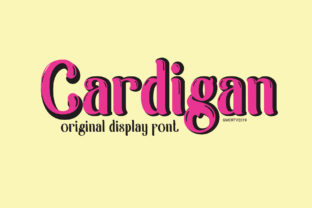
Cardigan isn’t just another display font—it’s a thoughtful fusion of retro charm and contemporary clarity. Designed with intention, it draws direct inspiration from vintage swimming pool posters: the kind with bold outlines, confident spacing, and a relaxed yet authoritative presence. But Cardigan goes further. It integrates subtle hand-drawn qualities—not scribbles or roughness, but gentle irregularities in stroke weight and terminal shape that give it warmth and character without sacrificing professionalism.
This balance makes Cardigan especially useful when you need typography that commands attention *and* invites trust. Whether you’re launching a boutique skincare line, designing a film festival poster, or refreshing your newsletter header, Cardigan delivers sophistication without stiffness. It doesn’t shout; it states—clearly, calmly, and memorably.
Where Cardigan Fits Naturally
Because it’s built as a display font, Cardigan shines where impact matters most: headlines, logos, cover art, signage, and short-form visual communication. It’s not intended for body text—but that’s by design. Its strength lies in distilling identity into a few well-chosen words.
- Branding & Logos: Pair Cardigan with a clean sans-serif (like Inter or Manrope) for contrast. Use it for your brand name alone—no tagline needed—to anchor recognition. A coffee roaster named “Haven Roast” gains instant gravitas when set in Cardigan at scale, with ample letter spacing and a muted earth tone palette.
- Print & Editorial: Magazines and zines benefit from Cardigan’s rhythmic flow. Try it for section headers (“Field Notes,” “Studio Visits,” “Local Voices”) to create visual hierarchy while reinforcing editorial tone—thoughtful, grounded, human-centered.
- Film & Event Design: Think festival banners, screening posters, or DVD/Blu-ray covers. Its retro roots lend authenticity to period pieces, while its modern refinement keeps it relevant for contemporary indie work. A documentary about coastal architecture? Cardigan in deep navy on off-white paper feels both timeless and intentional.
- Apparel & Merchandise: On tees, tote bags, or enamel pins, Cardigan holds up beautifully at medium to large sizes. Its generous x-height and open counters ensure legibility even in screen-printed or embroidered formats. Avoid tight tracking—let the letters breathe.
Adapting Cardigan Across Audiences and Goals
Different users bring different priorities—and Cardigan adapts accordingly. A freelance designer pitching to a wellness startup might emphasize its calm authority; an educator creating workshop materials might highlight its approachability and clarity; a small-batch ceramicist could lean into its tactile, hand-informed texture.
For marketers, Cardigan works best when paired with strategic restraint. Use it once per layout—for the headline, logo, or hero banner—and let supporting type do the rest. Overuse dilutes its impact. For bloggers or content creators, consider using Cardigan only in featured post titles or series headers—not every blog title—to build visual rhythm over time.
Small business owners often ask: “Will this font reflect my values?” With Cardigan, the answer is yes—if those values include thoughtfulness, craftsmanship, and quiet confidence. It avoids trend-driven gimmicks (no forced distortion, no artificial distressing), making it durable across seasons and platforms.
Practical Tips for Stronger Results
Clarity starts with context. Here’s how to keep Cardigan effective, consistent, and audience-friendly:
- Respect its role. Use it for display only—never for paragraphs, captions under 14pt, or interface labels. Let it introduce, not explain.
- Adjust tracking deliberately. Default spacing often works well, but for all-caps usage (e.g., “SUMMER SERIES”), increase letter-spacing by 50–100 units to prevent visual crowding.
- Limit color contrast to two tones. Cardigan’s structure thrives with simplicity: dark-on-light or light-on-dark. Avoid gradients within the type itself—its personality comes from form, not effects.
- Test at real size. View it on the actual medium: printed at 24pt on a flyer, rendered at 48px on a mobile banner, stitched onto fabric. What reads cleanly on screen may blur in embroidery—so always verify.
- Pair with purpose. Choose secondary typefaces that complement, not compete. A neutral geometric sans (like Poppins or Space Grotesk) supports Cardigan’s warmth without echoing it. Avoid other display fonts in the same composition.
Real Projects, Real Decisions
A Brooklyn-based bookstore used Cardigan for its seasonal reading list poster—“Spring Reads, 2024”—printed on recycled kraft paper. They chose a slightly reduced weight (not the boldest cut) to soften contrast while keeping presence. The result felt curated, unhurried, and deeply aligned with their ethos.
A university communications team applied Cardigan to a campaign celebrating alumni innovators. Instead of full names, they used first names only (“Maya,” “Diego,” “Aisha”) in large format across campus windows. The font’s openness and gentle rhythm made each name feel personal—not promotional.
Even educators are finding value: one high school art teacher uses Cardigan for exhibition titles in student galleries. It signals importance without intimidation, helping young creators see their work as part of a broader visual language.
Why This Kind of Thought Matters
In a landscape saturated with quick-turnaround templates and AI-generated assets, choosing a font like Cardigan is a small but meaningful act of intention. It says: *I care how this is seen. I want it to last. I’m investing in clarity, not just speed.*
That mindset extends beyond typography. It’s reflected in how you edit a photo for consistency, how you sequence slides for narrative flow, how you choose one strong image over three safe ones. Cardigan doesn’t do the work for you—but it gives you a reliable, expressive tool to support decisions rooted in purpose.
If you’re evaluating fonts for your next project, ask yourself: Does it serve the message—or distract from it? Does it feel like a natural extension of the voice I’m trying to share? Cardigan answers “yes” to both—without demanding attention it hasn’t earned.