Vanderink: A Stylish, Serious Display Font
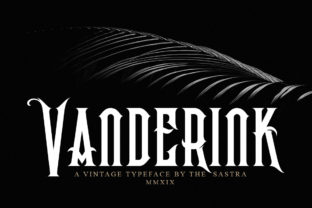
Vanderink isn’t just another decorative typeface—it’s a carefully crafted display font designed to command attention while maintaining clarity and confidence. If you’ve ever struggled to find a font that feels both modern and grounded, authoritative yet approachable, Vanderink bridges that gap. It’s built for moments when your words need to stand out—not with flashiness, but with quiet strength and contemporary polish.
What Makes Vanderink Stand Out
At its core, Vanderink is a display font—meaning it shines in larger sizes where legibility and personality matter most. Think headlines, logos, posters, presentation titles, or hero sections on websites. Its letterforms balance geometric precision with subtle humanist warmth: clean lines, even contrast, and just enough character in the terminals and curves to avoid feeling sterile. The uppercase letters carry weight and presence; the lowercase offers rhythm and readability—even at smaller display sizes like 36–48px.
Unlike many trend-driven fonts that age quickly, Vanderink leans into timelessness by avoiding extreme quirks or overused stylistic tropes. There’s no exaggerated thin-thick contrast, no forced irregularity, no forced “hand-drawn” charm. Instead, it delivers consistency, professionalism, and visual cohesion—making it especially valuable for brands, educators, and creators who want to communicate seriously without sounding stiff.
Where Vanderink Fits Into Real Projects
You don’t need to be a designer to benefit from Vanderink. Whether you’re launching a small business website, designing a workshop slide deck, creating Instagram graphics for your coaching practice, or building a portfolio site as a freelance writer or photographer—Vanderink adds polish without complexity.
- Small business owners use Vanderink for logo lockups and banner headers because it conveys reliability and forward-thinking energy—ideal for wellness studios, boutique design agencies, or sustainable product brands.
- Educators and course creators choose it for course titles and module headings—it signals substance and structure, helping learners subconsciously associate content with credibility.
- Bloggers and marketers apply it sparingly in featured post titles or email newsletter banners, where it lifts visual hierarchy without overwhelming body text set in simpler sans-serifs like Inter or Open Sans.
- Freelancers and creatives include Vanderink in pitch decks and proposal covers—it subtly communicates that their work is both thoughtful and polished.
It pairs naturally with neutral, highly readable text fonts. Try Vanderink for headings alongside a friendly, open sans-serif for paragraphs—this combination works across print handouts, digital presentations, and web layouts alike.
Practical Tips for Using Vanderink Well
Vanderink performs best when used intentionally—not everywhere, but where impact matters. Because it’s a display font, it’s not meant for long-form reading. Avoid using it for body copy, captions under 20px, or dense UI labels. Instead, lean into its strengths: scale, contrast, and tone.
Start simple. Try it in one prominent place first—like your website’s main headline or the title of your latest project case study. Notice how it changes the mood: more focused, more intentional, more memorable. Then expand thoughtfully. A common mistake is overusing display fonts across multiple heading levels (H1, H2, H3), which dilutes their power. Reserve Vanderink for your top-tier typographic moments.
Also keep context in mind. Vanderink’s contemporary feel works beautifully in digital-first environments—think SaaS dashboards, modern e-commerce banners, or minimalist podcast show art. But if your brand leans heavily into vintage, rustic, or playful aesthetics, it may feel misaligned unless balanced with supporting elements (texture, color, illustration) that soften or reinterpret its formality.
Who Benefits Most—and Why
Vanderink resonates especially well with people who value clarity, intention, and quiet confidence in their communication. That includes entrepreneurs launching their first service-based business and wanting to signal competence without sounding corporate; educators preparing professional development materials and needing to balance authority with accessibility; or freelancers curating a personal brand that reflects both creativity and discipline.
It’s also a smart choice if you’re new to typography. You don’t need advanced design knowledge to use Vanderink effectively—you just need to understand *where* emphasis belongs. Its straightforward structure means fewer decisions about spacing, weight variation, or stylistic alternatives. Many versions come with a single, well-hinted weight optimized for screen and print, reducing setup friction.
Things to Consider Before You Use Vanderink
First, check licensing. Vanderink is typically available under desktop, web, and app licenses—make sure the version you choose covers your intended use. For example, embedding it in a client’s website requires a web font license, not just a desktop one. Some platforms (like Canva or Adobe Express) may offer Vanderink as part of their library—but verify usage rights before publishing commercially.
Second, test readability across devices. While Vanderink renders cleanly on modern screens, preview how it appears on mobile—especially in bold or tight line-height settings. Adjust tracking (letter spacing) slightly if needed for clarity at smaller display sizes.
Third, consider your audience’s expectations. In highly technical or traditional industries (e.g., legal services or financial reporting), Vanderink’s contemporary edge may feel too fresh unless paired with conservative supporting elements. In creative, educational, or lifestyle spaces, that same freshness becomes an asset.
A Font That Grows With Your Goals
Vanderink isn’t about chasing trends—it’s about finding a typographic voice that supports your message, not overshadows it. It’s the kind of font that feels equally at home on a conference stage banner, a printed program for a community workshop, or the “About” section of a thoughtful newsletter. Its versatility lies in restraint: strong enough to anchor a design, flexible enough to adapt across mediums and moods.
As you explore tools like Figma, WordPress, or Google Slides, keep Vanderink in mind—not as a default, but as a deliberate choice. One that says, “This matters,” without saying it loudly. When your goal is to be seen, understood, and remembered—not just noticed—Vanderink delivers with calm assurance.