Bitter Gourd: The Playful, Comic-Inspired Display Font That Brings Warmth to Everyday Projects
If you’ve ever scrolled through a design resource site and paused at a font that felt like it winked at you—bold, bouncy, and full of quiet charm—you’ve probably stumbled upon Bitter Gourd. It’s not a typeface built for dense paragraphs or corporate reports. Instead, Bitter Gourd is a friendly, hand-drawn–inspired display font designed to add personality, warmth, and just the right amount of whimsy to things people actually see, touch, and connect with.
What Makes Bitter Gourd More Than Just “Cute”
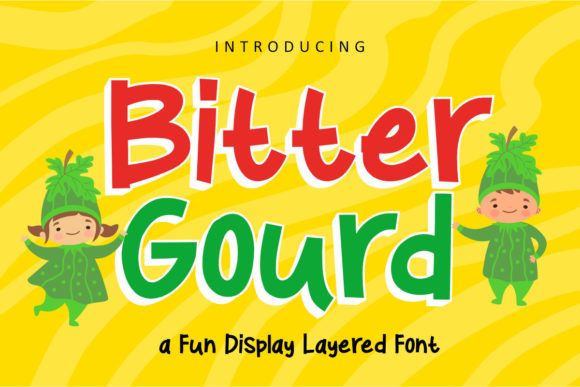
Bitter Gourd was crafted with comic book lettering in mind—not the flashy, over-the-top kind, but the kind you’d find in indie zines, cozy webcomics, or nostalgic Sunday funnies. Its letters have gentle irregularities: slightly uneven baselines, soft curves, subtle weight shifts, and open counters that invite the eye without demanding attention. It’s not rigidly geometric, nor is it overly decorative. That balance is why it works so well in real life—not as a novelty, but as a thoughtful tool.
Where Bitter Gourd Fits Naturally (and Where It Doesn’t)
Think of Bitter Gourd like a great pair of well-worn sneakers: perfect for casual walks, weekend markets, or creative hangouts—but not your first choice for a formal dinner or a marathon. Here’s where it shines—and where it’s best left on the shelf:
- Handmade product labels: Small-batch soap makers, ceramicists, and jam artisans use Bitter Gourd on jar tags and stickers because it feels human, approachable, and quietly confident—no sterile sans-serif vibes here.
- Local café and bakery signage: A chalkboard-style menu board, a seasonal special poster, or even a laminated takeout bag tag gains instant charm when set in Bitter Gourd. Customers subconsciously register it as “small, cared-for, local.”
- Independent children’s books and early-learning printables: Its open shapes and generous spacing help emerging readers distinguish letters more easily than tightly spaced or highly stylized fonts—plus, its friendliness supports emotional safety in learning materials.
- Wedding stationery with a relaxed vibe: Think rustic venues, backyard ceremonies, or elopements where couples want elegance without formality. Bitter Gourd works beautifully for names on place cards, welcome signs, or digital RSVP graphics—especially when paired with a clean, neutral body font.
- Instagram story templates and Canva social posts: Creators who post craft tutorials, weekly journal prompts, or mindful habit trackers often reach for Bitter Gourd for headers—it adds visual rhythm without competing with photos or illustrations.
It’s less ideal for long-form content, legal disclaimers, accessibility-critical interfaces (like medical forms), or anything requiring strict typographic hierarchy—like multi-level navigation menus or data dashboards. Its strength lies in moments of pause, not persistence.
Who Benefits Most—and How They Use It Differently
A pottery studio owner in Portland might use Bitter Gourd only for the “Hand-thrown mugs • Local clay • Oven-safe” line on their packaging—keeping everything else in a crisp, readable sans serif. Meanwhile, a freelance illustrator building a portfolio site may set their project titles in Bitter Gourd and use it consistently across thumbnails, case study headers, and even email newsletter banners. Same font. Different intent. Same warmth. Different weight.
Teachers designing classroom posters often layer Bitter Gourd over watercolor backgrounds for behavior charts or reading challenge trackers—it softens directives (“You’ve read 5 books!”) without diluting meaning. Similarly, mental health practitioners creating printable grounding exercises sometimes choose Bitter Gourd for affirmations (“You’re doing enough”) because its rounded, unhurried shape subtly echoes compassion.
Practical Things to Keep in Mind Before You Type
Size matters more than usual. Bitter Gourd performs best at 24px and up on screen, and 18pt+ in print. At smaller sizes, its playful details can blur together—especially on low-resolution devices or in tight label spaces. If you’re printing tiny jar labels, test a physical proof first.
Pairing is key—and surprisingly easy. Because Bitter Gourd has such a distinct voice, it pairs beautifully with quiet, no-nonsense companions: Inter, Lato, Source Sans Pro, or even Georgia. Avoid other display fonts or scripts unless you’re intentionally going full theme-park (and even then—proceed with joy, but caution).
Check your licensing. While many free versions exist for personal use, commercial projects—especially those involving resale items like printable planners or merch—require checking the license terms. Some versions allow unlimited use; others ask for attribution or a small fee. A quick glance at the foundry’s page saves headaches later.
Contrast isn’t optional—it’s essential. Bitter Gourd relies on clear background contrast to hold its shape. Avoid light gray text on off-white backgrounds, or placing it directly over busy patterns. A solid color block, subtle texture, or generous white space gives it room to breathe.
Strengths You’ll Notice Right Away
First, its approachability. Unlike fonts that feel like they’re auditioning for a tech keynote, Bitter Gourd doesn’t try to impress—it invites. That makes it powerful for brands and creators who want to signal authenticity over authority.
Second, its versatility within limits. It comes in one weight (usually regular), yet feels dynamic because of its natural rhythm—letters don’t march in lockstep, so lines of text gain gentle movement. That helps break visual monotony without needing bold/italic variants.
Third, its cultural resonance. Though inspired by Western comics, its openness and softness translate well across audiences who value gentleness in design—whether you're launching a mindfulness app, a sustainable yarn shop, or a bilingual storybook for preschoolers.
A Few Gentle Limitations to Acknowledge
Bitter Gourd isn’t multilingual out of the box—most versions support basic Latin characters (A–Z, numbers, common punctuation), but don’t include extended diacritics, Cyrillic, or Asian language sets. If your audience includes Spanish speakers using accents (café, niña) or French quotation marks (« »), verify glyph coverage before committing.
It also doesn’t solve layout problems on its own. Great typography still needs smart spacing, intentional hierarchy, and alignment awareness. Using Bitter Gourd won’t automatically make a cluttered flyer feel calm—but used thoughtfully, it can be the first step toward that feeling.
Real Moments, Real Results
A small textile brand in Asheville switched from a generic rounded font to Bitter Gourd for their Instagram quote graphics—and saw a 22% increase in saves over three months. Not because the font “went viral,” but because followers began recognizing the tone: warm, handmade, unhurried.
A homeschooling parent told us she prints Bitter Gourd–based spelling lists for her 7-year-old because “he stops arguing about doing them. Says it looks like ‘the words are smiling.’” That’s not anecdotal fluff—it’s evidence of how type can quietly shape emotional response.
That’s the quiet power of Bitter Gourd: it doesn’t shout. It leans in. And in a world full of polished, predictable, and perpetually urgent design, that kind of presence is rare—and deeply useful.