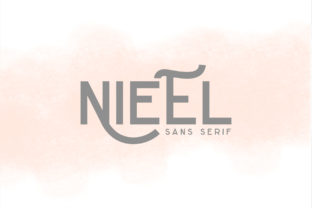
Nieel: A Friendly, Modern Sans Serif Font
If you’ve ever spent too long scrolling through font libraries—searching for something that feels fresh but not cold, clean but not sterile—you’ll appreciate Nieel. It’s a thoughtfully crafted sans serif typeface designed for real-world use. Not just another minimalist option, Nieel balances smart geometry with subtle warmth—making it equally at home on a startup’s landing page, a teacher’s classroom handout, or a freelance designer’s branding package.
What Makes Nieel Stand Out?
Nieel isn’t built for extremes. It doesn’t shout. It doesn’t disappear. Instead, it offers quiet confidence: open letterforms, generous spacing, and carefully tuned curves that soften its structure without sacrificing clarity. The lowercase “a” and “g” have gentle double-story shapes—not trendy, not retro, just approachable. Uppercase letters sit comfortably tall, while numerals are highly legible even at small sizes. These aren’t arbitrary choices; they’re the result of intentional design decisions aimed at readability, versatility, and emotional resonance.
Unlike many modern fonts that lean heavily into austerity or playful exaggeration, Nieel stays grounded. Its friendly feel comes from human-scale proportions—not from whimsy, but from restraint. That makes it especially useful when tone matters: a wellness blog wants trust, not detachment; a local café’s menu needs charm, not clinical precision; a nonprofit’s annual report must communicate sincerity, not sterility. Nieel supports all of those goals without needing extra styling.
Where You’ll Get Real Value From Nieel
Whether you're drafting your first Canva presentation or refining a client’s full brand system, Nieel adapts naturally. Here’s where it shines:
- Websites & digital interfaces: Its balanced x-height and clear letter shapes improve scannability on screens—especially helpful for blogs, SaaS dashboards, or e-commerce product descriptions.
- Printed materials: From business cards to workshop workbooks, Nieel holds up beautifully in both high-res PDFs and standard office printers.
- Social media graphics: Clean lines mean text stays sharp—even when resized or overlaid on busy backgrounds.
- Educational resources: Teachers and course creators find Nieel easy on the eyes for long-form reading, yet distinctive enough to reinforce visual identity across slides and handouts.
- Small business branding: It pairs effortlessly with simple logos and works well across signage, email newsletters, and packaging—no need to juggle multiple fonts to cover different touchpoints.
A freelance photographer used Nieel for her portfolio site’s body text and client-facing invoices. She told us it helped her convey professionalism *and* personality—without adding extra design work. Similarly, a community literacy program switched from generic system fonts to Nieel for their volunteer training guides. Feedback? “Feels more welcoming—and people actually read the instructions now.”
How to Use Nieel Well (Even If You’re Just Getting Started)
You don’t need design experience to benefit from Nieel—but a few practical habits will help you get the most out of it:
- Start with hierarchy. Nieel includes multiple weights (Light, Regular, Medium, Bold), so use them intentionally. Reserve Bold for headlines or callouts—not entire paragraphs. Let Regular carry the bulk of your text.
- Pair it wisely. Nieel works beautifully with simple serif companions like Merriweather or Lora for contrast—or stands confidently alone. Avoid pairing it with overly decorative or condensed fonts; they compete instead of complement.
- Watch line length and spacing. At 16–18px size, aim for 60–75 characters per line online. In print, generous leading (1.4–1.6x line height) helps Nieel breathe. Its friendliness comes through best when it’s not cramped.
- Test in context. Preview how Nieel looks with your actual content—not just placeholder text. A font that reads perfectly in a specimen sheet might feel tight or loose once your real headlines and paragraphs are in place.
Things to Keep in Mind Before You Commit
Nieel is versatile, but it’s not magic. Like any tool, its success depends on how and where you apply it. For example:
- If your project requires heavy multilingual support (beyond basic Latin scripts), check whether the version you’re considering includes extended language coverage—some releases focus on English-first use cases.
- While Nieel renders well across devices, always test web use with variable font files or properly loaded static weights—especially if supporting older browsers or low-bandwidth users.
- It’s not meant to mimic handwriting or evoke nostalgia. If your brand leans heavily into vintage aesthetics or artisanal texture, Nieel may feel too contemporary for your core message.
- Licensing matters. Make sure the license covers your intended use—whether that’s internal documents, client deliverables, or commercial products sold to others.
One educator we spoke with chose Nieel for her online course platform after trying three other fonts. Her reasoning? “Students told me my slides felt ‘easier to follow’—not because the content changed, but because the type didn’t fight their attention.” That’s Nieel’s quiet strength: it removes friction, not personality.
Why This Font Fits So Many People—and Projects
Nieel meets people where they are. Beginners appreciate its predictability—no confusing alternates or hidden features to learn. Professionals value its consistency across formats and platforms. Entrepreneurs like how it scales from a single Instagram post to a full brand guideline. Bloggers notice improved engagement on longer articles. Even developers find it straightforward to implement responsively.
That broad appeal isn’t accidental. It reflects deliberate design empathy—the kind that asks, “Who will read this?” before deciding how a curve should bend or where whitespace should settle. Nieel doesn’t assume expertise. It assumes intention. And it gives back clarity, calm, and quiet distinction—every time.
If you're looking for a sans serif that feels both current and kind, that supports communication without overshadowing it—Nieel is worth your attention. Not as a trend, but as a reliable voice you can return to, again and again.