Adine: Bold, Tribal, Unmistakable
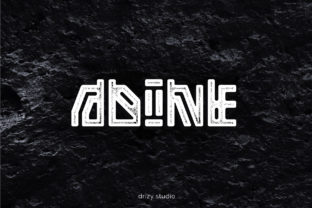
Adine isn’t just another display font—it’s a statement. With its strong, angular strokes, subtle tribal motifs, and confident rhythm, Adine carries an adventurous spirit that feels both grounded and forward-looking. It’s not delicate or minimalist. It doesn’t whisper. It leans in, holds space, and invites attention—without shouting. Think of it as the kind of typeface you’d choose for a brand that values authenticity over polish, craft over convenience, and presence over pretense.
What Makes Adine Stand Out Visually
At first glance, Adine reads as a contemporary serif—but look closer. Its serifs are sharp, often asymmetrical, echoing hand-carved marks or woven patterns. The letterforms balance geometric discipline with organic irregularity: tight apertures in ‘a’ and ‘e’, a low-contrast stroke weight that avoids monotony, and terminals that taper like chisel cuts. There’s no forced elegance here—just intentionality. It’s a premium font built for impact, not background noise.
Unlike many modern typography trends that chase neutrality, Adine embraces character. It’s not a script font or handwritten font, but it carries human texture—especially in its italic, where slant and weight shift deliberately to suggest motion and energy. As a display font, it thrives at larger sizes: headlines, posters, signage, cover art. But it also holds up surprisingly well in short bursts of body text—say, pull quotes in editorial design or captions in a zine layout.
Where Adine Earns Its Place
This is where practicality matters. Adine shines in projects where voice and identity matter more than conformity. A small-batch coffee roaster? Yes—its packaging gains warmth and distinction without leaning into clichéd “rustic” tropes. An indie publisher launching a literary journal with themes of migration and myth? Absolutely—the font’s rhythmic cadence and cultural resonance deepen the reader’s emotional entry point. A wellness brand redefining strength on its own terms? Adine’s grounded confidence supports that narrative better than a sleek sans serif ever could.
You’ll see it work powerfully in logo design (especially when paired with a clean, neutral secondary typeface), social media graphics (where boldness cuts through scrolling fatigue), and packaging design (where shelf presence hinges on instant recognition). It’s less suited for long-form web copy or dense legal disclaimers—not because it’s illegible, but because its personality demands breathing room. Use it where you want people to pause, not skim.
How Adine Shapes Perception—and Why That Matters
Typefaces don’t just communicate words—they shape how those words land. Adine signals competence *with* character. It tells your audience: “We know what we’re doing—and we’re not hiding behind generic defaults.” That builds trust faster than a polished but forgettable sans serif ever could. In brand identity work, consistency with Adine means choosing it for key touchpoints—logos, campaign headlines, product names—and sticking to it. That repetition builds recognition, especially when contrasted against softer supporting fonts.
Readability isn’t compromised—it’s redirected. Adine asks readers to engage, not glide. That works beautifully for audiences aged 20–50 who value substance and storytelling: designers selecting assets for client work, entrepreneurs building a differentiated business, bloggers crafting memorable newsletters, crafters labeling handmade goods with intention. It doesn’t try to be everything. It tries to be *memorable*, and it succeeds.
Using Adine Well: Practical Considerations
Before licensing, check what’s included. Most versions of Adine offer Regular, Bold, and Italic—some include condensed or extended variants. If your project needs fine-grained hierarchy (e.g., subheadings that need visual distinction without size jumps), confirm whether those weights support optical sizing or have true small-cap alternatives. Don’t assume.
Test pairings early. Adine pairs best with typefaces that provide contrast without conflict: a restrained, high-x-height sans serif (like Inter or Poppins) for body text, or a quiet slab serif (like Courier Prime or IBM Plex Serif) for structured layouts. Avoid pairing it with other decorative or heavily stylized fonts—that dilutes its impact. And never force it into tight line heights or narrow columns; give it room to breathe.
For web design, serve Adine as a commercial font via a reputable foundry or licensed platform—never self-host a pirated version. Check loading performance: its distinctiveness is worth the slight overhead, but optimize fallbacks thoughtfully (e.g., font-family: "Adine", "Inter", -apple-system, sans-serif;). On print, use OpenType features like ligatures or stylistic alternates sparingly—only where they enhance meaning, not decoration.
Licensing Isn’t Just Legal—It’s Ethical Design Practice
Adine is a commercial font, and its creators deserve fair compensation. Most licenses cover desktop, web, and app use—but always verify scope before launch. If you’re a freelancer embedding it in client deliverables, confirm whether the license permits redistribution (many do, but some require extended coverage). Small business owners building Shopify stores or Canva templates? Double-check usage rights for templated environments—some platforms restrict custom font uploads unless explicitly permitted.
Think of licensing not as a cost, but as part of your design assets budget—like quality paper stock or professional photography. It ensures longevity, updates, and technical support. And it aligns your practice with E-E-A-T principles: expertise, experience, authoritativeness, and trustworthiness start with respecting the craft behind the tools you use.
Final Thought: Adine Is a Choice, Not a Default
You don’t reach for Adine when you’re unsure. You reach for it when you’ve done the work—when you know your audience, your message, and what feeling you want to leave behind. It won’t solve weak strategy or unclear messaging. But in the right hands, on the right project, Adine becomes part of the story—not just the wrapper. Whether you’re designing a festival poster, naming a ceramic studio, or launching a podcast about untold histories, Adine gives your work a pulse. Not flashy. Not fleeting. Just real.