Rismania: A Display Font That Bridges Elegance and Practicality in Real Workflows
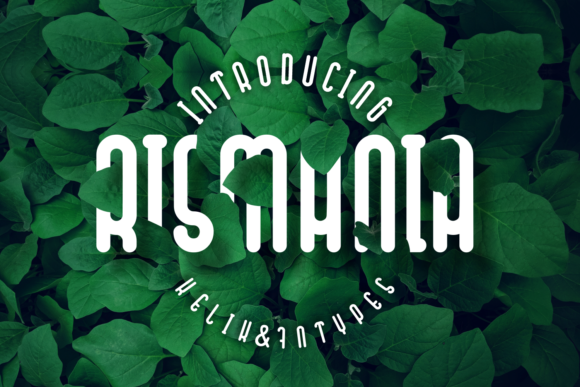
Rismania isn’t just another decorative typeface—it’s a display font engineered for impact without sacrificing clarity or warmth. Designed with balanced letterforms, subtle contrast, and generous spacing, Rismania delivers visual sophistication while remaining highly legible at larger sizes. It sits comfortably between classic serifs and modern sans-serifs, making it especially effective where personality matters: headlines, branding assets, presentation slides, social media banners, and editorial features. For professionals who need to communicate authority and approachability in equal measure—whether launching a course, redesigning a website, or preparing a pitch deck—Rismania offers a consistent tonal anchor.
Where Rismania Fits Into Your Creative and Operational Flow
Unlike system fonts or utility typefaces meant for body text, Rismania operates at the *intent* layer of design: it signals purpose before a single word is read. That makes its integration less about “adding a font” and more about aligning visual tone with strategic goals. You’ll typically reach for Rismania during the refinement phase—not at the start of ideation, but once messaging, audience, and context are clarified. For example:
- A small business owner finalizing a rebrand might use Rismania for their new logo lockup and hero section headline—only after choosing brand colors, voice guidelines, and core value statements.
- An educator designing a workshop handout may apply Rismania to section headers and learning objectives—after structuring content and identifying key takeaways.
- A freelance designer prepping a client presentation could set project titles and milestone labels in Rismania—once the narrative arc and visual hierarchy are locked.
This timing matters. Introducing Rismania too early risks misalignment; too late, and you lose the opportunity to let its character reinforce your message. Its strength lies in deliberate placement—not blanket application.
Compatibility and Integration: How Rismania Works With What You Already Use
Rismania performs best when paired intentionally—not isolated. It pairs cleanly with neutral, highly readable sans-serifs like Inter, Lato, or Open Sans for body copy. This contrast creates rhythm: Rismania sets the mood; the supporting font handles information delivery. In digital environments, Rismania works reliably as a web font via standard @font-face declarations or through platforms like Google Fonts (if hosted) or Adobe Fonts. No special plugins or rendering workarounds are needed—but always test fallback behavior across devices and browsers, especially on mobile where font loading can affect perceived performance.
For print or static asset creation (PDFs, posters, slide decks), embedding Rismania is straightforward in tools like Figma, Adobe Illustrator, or Canva Pro. Just ensure licensing permits your use case—especially if distributing branded templates externally or embedding in client deliverables. Rismania’s OpenType features include standard ligatures and stylistic alternates, which add polish when enabled manually in design software—but they’re not required for strong results. Simplicity often serves better than ornamentation.
Practical Implementation Tips for Consistent, Efficient Use
Adopting Rismania smoothly starts with intentionality—not volume. Here’s how seasoned users integrate it without friction:
- Define one primary use case first. Start with a single high-impact application—like email subject lines, blog post headers, or product page titles—and apply Rismania there consistently for two weeks. Observe how it affects engagement, readability, and brand perception before expanding.
- Set clear size and weight boundaries. Rismania shines at 32px and above. Avoid using it below 24px in digital interfaces or smaller than 18pt in print. Stick to Regular or SemiBold weights unless your design system explicitly supports Bold variants—overweighting risks visual heaviness.
- Build reusable style tokens. In Figma or design systems, create a “Display Heading” text style using Rismania with preset line-height (1.2), letter-spacing (+20 units), and color variables. This ensures consistency across collaborators and reduces decision fatigue.
- Document usage rules—not just specs. Note not just “font-family: Rismania”, but also when and why it applies. Example: “Use Rismania only for H1 and H2 in marketing-facing pages; never for UI labels, buttons, or data tables.” Clarity here prevents drift.
These aren’t rigid constraints—they’re guardrails that preserve Rismania’s effectiveness. When used without discipline, even elegant fonts dilute their own impact. With structure, they become reliable levers for tone and attention.
Long-Term Use: Maintaining Quality and Relevance
Rismania’s longevity depends less on trend alignment and more on how well it supports your evolving needs. As your projects scale—from solo blogs to team-managed websites, or from local workshops to online courses—revisit how Rismania functions across contexts. Does it still feel aligned with your audience’s expectations? Does it render clearly in dark mode? Does it hold up next to photography or illustration-heavy layouts?
One useful check: audit a recent batch of assets (say, last 10 social posts or 5 client presentations) and ask: Did Rismania help clarify meaning—or did it distract? Was it applied to reinforce hierarchy, or merely to “make it look nice”? Honest answers guide smarter iteration. You might find, for instance, that Rismania works brilliantly for webinar titles but feels mismatched in formal proposal covers—prompting a secondary display option for those cases. That’s not failure; it’s calibration.
Also consider accessibility. While Rismania itself meets contrast requirements at appropriate sizes, always verify foreground/background combinations using tools like WebAIM’s Contrast Checker. And remember: screen readers ignore font choice, but they don’t ignore poor heading structure. Pair Rismania with proper semantic HTML (h1–h6) and logical document flow—never sacrifice underlying architecture for surface-level polish.
Real-World Workflow Examples
Here’s how Rismania integrates into actual daily operations—no hypotheticals:
- A blogger drafting a newsletter: Uses Rismania for the subject line and opening header image text. Body copy remains in a legible sans-serif. The font choice signals “this is a curated moment”—not just another update.
- A university department launching a new certificate program: Applies Rismania to the program name in all digital and print collateral, while keeping course descriptions and enrollment steps in a highly accessible system font. The result: instant recognition, zero ambiguity about what’s new.
- A solopreneur building a Notion workspace: Sets Rismania as the custom font for dashboard titles and weekly priority headers—using Notion’s custom CSS injection (where supported). The visual cue helps shift mental gear between planning and execution modes.
In each case, Rismania isn’t doing the work—it’s clarifying the work’s intent. That’s its quiet utility.
Final Thought: Let Rismania Serve Your Process, Not Define It
Rismania earns its place not by being everywhere, but by being *right there*—at the precise point where clarity meets character. It doesn’t replace strategy, research, or revision. It supports them. Whether you’re refining a landing page, preparing teaching materials, or designing a client report, Rismania works best when treated as a tool of emphasis—not decoration. Choose it deliberately. Apply it sparingly. Test it rigorously. And always ask: does this use make the message stronger, or just louder?