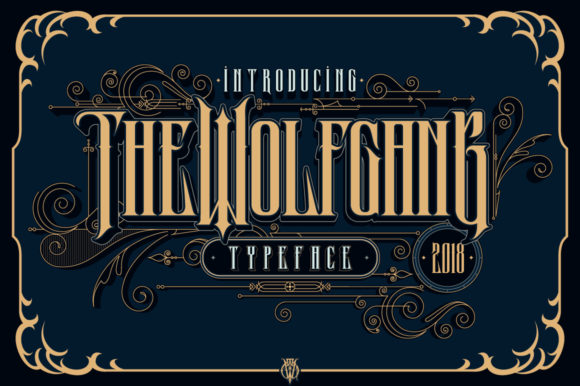
Delacruz: A Bold Display Font with Purposeful Charm
Delacruz is a display typeface designed for impact—not just visual presence, but expressive clarity. It stands apart from generic bold sans-serifs and ornate script fonts by balancing strong structural confidence with subtle, humanistic details. At first glance, Delacruz commands attention: high contrast between thick and thin strokes, generous x-height, and confident letterforms built for legibility at larger sizes. But its distinction lies in the “charming twist”—a set of considered design choices that soften rigidity without sacrificing authority. Slight flares on terminals, gently tapered serifs on select characters (like C, S, and Z), and carefully tuned spacing give Delacruz warmth and personality, making it feel intentional rather than merely decorative.
Where Delacruz Fits Among Display Fonts
Display fonts fall into broad categories: geometric, humanist, serif-based, script-inspired, and hybrid styles. Delacruz belongs to the hybrid group—neither strictly sans-serif nor traditional serif, but a synthesis. Unlike rigid geometric fonts such as Montserrat Bold or Poppins ExtraBold, Delacruz avoids mechanical uniformity. Its curves are drawn with organic variation; its verticals carry slight modulation. Compared to high-contrast serif fonts like Didot or Bodoni, Delacruz trades sharp elegance for grounded approachability—its serifs are modest, functional, and never dominant. And unlike many script-derived display fonts, it maintains clear letterform recognition even at smaller display sizes (e.g., 36–48px), avoiding ambiguity in names, logos, or short headlines.
This positioning makes Delacruz especially useful where tone matters as much as visibility: branding for creative studios, editorial mastheads, packaging for artisanal goods, or event posters seeking sophistication without stiffness. It’s not meant for body text—its rhythm and spacing aren’t optimized for long reading—but it excels where typography must communicate voice in a single glance.
Strengths That Support Real-World Use
Three practical strengths make Delacruz stand out in application:
- Legibility at scale: Even with stylistic flourishes, character shapes remain distinct. The a, g, and Q avoid overcomplication, and counters stay open under moderate tracking adjustments.
- Tonal versatility: With thoughtful weight pairing (typically Regular, Bold, and sometimes Black), Delacruz can shift emphasis without changing font families—e.g., using Bold for a headline and Regular for a subhead maintains cohesion while creating hierarchy.
- Print and screen resilience: Its robust stroke contrast holds up well in both high-resolution print and modern web rendering. Unlike ultra-thin or ultra-condensed display fonts, Delacruz avoids pixelation or blurring on lower-DPI screens when used appropriately.
These qualities matter most when consistency across touchpoints is required—say, a café’s signage, menu board, and Instagram story template. Delacruz provides a unifying visual anchor without demanding excessive custom illustration or layout work.
Tradeoffs to Acknowledge Honestly
No display font works universally—and Delacruz has boundaries worth recognizing. Its charm relies partly on context. In environments saturated with high-energy visuals (e.g., music festival lineups or tech conference banners), its quiet confidence may read as understated rather than bold. Similarly, in highly formal contexts—legal documents, academic journals, or corporate annual reports—its subtle quirks can feel incongruous next to more neutral, established type systems.
Another consideration is language support. While Delacruz typically covers Latin-based languages thoroughly (including extended diacritics for French, Spanish, and German), it often lacks full Cyrillic, Greek, or extended Vietnamese glyph sets. If multilingual deployment is essential—especially for global-facing brands or bilingual communities—this requires verification before committing to Delacruz as a primary display choice.
Finally, pairing Delacruz thoughtfully matters. Its character means it doesn’t fade into the background. When combined with overly decorative companions or fonts with competing contrast patterns, visual tension arises. It pairs best with neutral, moderately spaced sans-serifs (e.g., Inter, Lato, or Work Sans) that provide clean counterpoint—not competition.
When Delacruz Is the Right Choice
Delacruz shines when the goal is to signal authenticity paired with polish. Consider it if you’re designing for:
- A boutique hotel brand wanting to evoke craftsmanship and hospitality—not cold luxury or playful whimsy;
- An independent publisher launching a literary magazine that values typographic nuance but avoids academic austerity;
- A local food producer developing packaging for small-batch preserves or roasted coffee—where warmth, care, and distinction matter more than trendiness;
- An arts nonprofit refreshing its identity to reflect both gravitas and accessibility, especially across printed programs and digital banners.
In each case, Delacruz contributes tonal clarity: it says “thoughtful” without saying “fussy,” “distinctive” without saying “distracting.” It supports storytelling rather than overshadowing it.
When Another Option May Serve Better
Delacruz isn’t ideal for every scenario—and that’s by design. If your project requires:
- Maximum neutrality: For government portals, healthcare interfaces, or enterprise dashboards where trust hinges on familiarity and predictability, a more restrained display option—or even a refined sans-serif used boldly—may align better with user expectations.
- Dynamic scalability: For responsive interfaces where headlines shrink significantly on mobile (e.g., below 24px), Delacruz’s finer details risk softening. A sturdier, less contrasted display face—or a variable font with optical sizing—could offer more consistent performance.
- Highly technical or data-dense contexts: Infographics requiring tight label integration, scientific posters with layered annotations, or UI elements needing precise alignment often benefit from monoline or low-contrast display fonts that don’t compete for visual weight.
None of these disqualify Delacruz—they simply clarify its domain of strength. Choosing typography is rarely about finding the “best” font, but the most appropriate one for a specific audience, medium, and message.
Making an Informed Decision
Evaluating Delacruz alongside alternatives benefits from concrete testing—not just side-by-side previews, but real usage. Try setting actual content: a product name, tagline, and short descriptor in Delacruz alongside two other candidates. View them at intended sizes, on target devices, and in ambient lighting similar to where they’ll appear. Note where letters blur, where spacing feels uneven, or where tone seems misaligned.
Also consider licensing and technical fit. Does the version you’re evaluating include web-optimized WOFF2 files? Are variable axes available (e.g., for fine-tuning weight or width)? Is the foundry known for reliable updates and documentation? These operational factors influence long-term usability as much as aesthetic appeal.
Ultimately, Delacruz earns its place not through novelty, but through consistency of intent. It doesn’t try to be everything—it commits to being a certain kind of bold: warm, articulate, and quietly assured. For teams weighing options with care, that specificity is a feature, not a limitation.