Menzanine Font: A Rustic Display Typeface with Stamp-Like Texture and Natural Charm
Typography is more than just letters on a screen or page—it’s emotion, identity, and intention made visible. Among the many typefaces designed to evoke specific moods, Menzanine stands out for its distinctive, handcrafted character. More than just another display font, Menzanine brings a tactile, organic sensibility to digital and print design through its signature stamp-like texture and rustic aesthetic. Whether you're crafting a craft brewery label, designing an artisanal book cover, or building a warm, grounded brand identity, Menzanine offers a compelling blend of authenticity and visual impact.
What Is Menzanine—and Why Does Its Texture Matter?
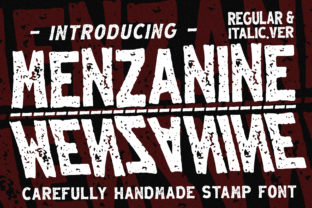
Menzanine is a display font family, meaning it’s intentionally crafted for prominent, short-form use—like headlines, logos, posters, or packaging—not extended body text. Unlike sleek, minimalist sans-serifs or highly legible serif workhorses, Menzanine embraces imperfection. Its glyphs feature subtle irregularities, uneven edges, and a grainy, stamped appearance reminiscent of rubber stamps pressed into kraft paper or weathered wood.
This isn’t a flaw—it’s the point. The “stamp-like texture” is a deliberate design choice that signals handmade quality, human touch, and natural authenticity. In an age saturated with ultra-polished, algorithmically optimized visuals, Menzanine offers visual breathing room: a reminder that not every message needs to feel corporate, scalable, or frictionless.
How Menzanine Differs From Other Display Fonts
- Not a script font: While many rustic fonts mimic handwriting or calligraphy, Menzanine uses clean, geometric letterforms—just softened by texture. It avoids cursive flourishes, making it more versatile and readable at larger sizes.
- Not distressed for effect: Unlike “grunge” fonts that simulate decay (scratches, tears, ink bleeds), Menzanine’s texture feels intentional and cohesive—like a carefully carved stamp, not accidental wear.
- Designed for clarity + character: Even with its textured surface, Menzanine maintains strong letter recognition. Its x-height is generous, counters are open, and spacing is thoughtfully adjusted—so charm doesn’t compromise communication.
Where Menzanine Fits in Modern Design Practice
Design today balances speed, scalability, and emotional resonance. Menzanine serves the latter without sacrificing professionalism—making it especially valuable across several real-world contexts:
Branding & Small Business Identity
Small businesses—from local coffee roasters to ceramic studios—increasingly lean into authentic storytelling. Menzanine helps reinforce that narrative visually. Imagine a café’s chalkboard menu header, a honey brand’s jar label, or a boutique’s seasonal sale banner—all benefit from Menzanine’s warmth and tactility. It subtly tells customers: This was made with care, not generated by template.
Educational & Cultural Materials
Museums, nature centers, and independent publishers often seek typography that reflects their values: sustainability, heritage, curiosity. Menzanine appears frequently in exhibition signage, botanical guide covers, and indie zines—where its natural feel complements analog-inspired layouts and earth-toned palettes. It doesn’t shout; it invites closer looking.
Digital Interfaces With Intention
While display fonts are rarely used in UI navigation or forms, Menzanine shines in purposeful digital moments: hero section headlines, email campaign banners, or animated landing page reveals. When paired with ample whitespace and restrained supporting fonts (e.g., a neutral sans-serif like Inter or Lato), it creates memorable contrast—without overwhelming users.
Practical Tips for Using Menzanine Effectively
Like any expressive typeface, Menzanine rewards thoughtful application. Here’s how to harness its strengths while avoiding common missteps:
- Respect its role: Use Menzanine for headlines, logos, quotes, or decorative initials—not paragraphs, captions, or data tables. Its texture reduces readability at small sizes and high density.
- Pair wisely: Contrast is key. Pair Menzanine with a clean, highly legible sans-serif (e.g., Manrope, Montserrat, or Open Sans) for body copy. Avoid other textured or decorative fonts—they’ll compete rather than complement.
- Consider color and background: Menzanine’s texture reads best against solid, muted backgrounds (cream, charcoal, forest green) or subtle organic textures (linen, recycled paper scans). Avoid busy patterns or low-contrast combinations (e.g., light gray on white).
- Test physical output: If printing, request a proof. Some ink absorption or paper tooth can enhance—or mute—the stamp effect. Uncoated stocks often bring out Menzanine’s character most faithfully.
Debunking Common Misconceptions
Because Menzanine looks handmade, designers sometimes assume it’s only suitable for “crafty” or “vintage” projects. That’s a limiting view. Its strength lies in contextual sincerity, not era-specific nostalgia. For example:
- A climate tech startup might use Menzanine in its annual impact report cover—not to look old-fashioned, but to ground complex data in human-scale values: stewardship, patience, resilience.
- An architecture firm specializing in biophilic design could employ Menzanine in presentation decks to echo the material honesty of exposed timber or rammed earth walls.
- A university’s continuing education program for sustainable agriculture might choose Menzanine for course brochures—not as retro affectation, but as visual alignment with land-based knowledge and slow learning.
In each case, Menzanine isn’t about pretending the past is better. It’s about using texture as a language—one that says, We value substance over speed. We honor process. We’re rooted, not rushed.
Why Typography Like Menzanine Matters Now
As AI-generated content floods feeds and interfaces grow increasingly homogenized, human-centered design choices carry new weight. Fonts like Menzanine aren’t relics—they’re tools for intentional differentiation. They help creators signal values before a single word is read. In SEO and content strategy terms, this builds E-E-A-T (Experience, Expertise, Authoritativeness, Trustworthiness): when your visual voice matches your mission, audiences sense coherence and credibility.
Moreover, accessibility remains central. Menzanine itself isn’t intended for body text—but its responsible use supports accessibility indirectly. By reserving it for high-impact moments and pairing it with highly legible companions, designers create clear visual hierarchy. That structure helps users scan, comprehend, and retain information—especially those with dyslexia or low vision who rely on consistent, predictable typographic cues.
Getting Started With Menzanine
Menzanine is available through major font marketplaces and foundries—including MyFonts and Fontspring. Most licenses include web font kits (WOFF2), desktop OTF/TTF files, and variable font options where applicable. Before licensing, preview Menzanine in your actual project environment: test rendering across devices, check fallback behavior, and verify licensing scope (e.g., number of pageviews for web use or concurrent users for apps).
And remember: great typography begins with understanding—not just installing. Spend time studying how Menzanine behaves at different weights, sizes, and line lengths. Try setting the same headline in Menzanine versus a neutral alternative. Notice where meaning shifts. That awareness is where true design fluency begins.
Ultimately, Menzanine isn’t just a font—it’s an invitation. An invitation to slow down, to prioritize feeling alongside function, and to let texture tell part of your story. In a world that often values efficiency above all else, choosing Menzanine is a quiet act of conviction: that some messages deserve to be felt, not just seen.