Whisky: Handwritten Charm That Feels Human, Not Designed
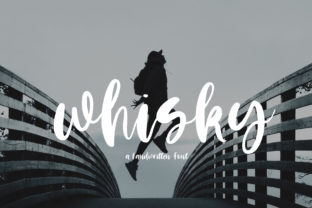
If you’ve ever stared at a clean, polished sans-serif logo and thought, “It’s perfect—but where’s the warmth?”, Whisky might be the quiet solution you didn’t know you needed. Whisky is a stunning handwritten font that doesn’t mimic calligraphy or brush lettering—it captures the subtle imperfections, slight variations in pressure, and gentle rhythm of real pen-on-paper handwriting. It’s not overly decorative or theatrical. It’s confident, legible, and quietly expressive—like someone who writes beautifully without trying too hard.
When Real People Reach for Whisky (Not Just Designers)
Whisky isn’t reserved for typography nerds or high-end branding studios. It shows up in everyday decisions—often when authenticity matters more than polish. A small-batch coffee roaster uses Whisky for their weekly newsletter subject line because it makes subscribers pause and think, “This feels like a note from a friend, not a promo blast.” A homeschooling parent chooses Whisky for printable spelling worksheets—not to impress, but because her 8-year-old actually *reads* the words faster when they look familiar, like something written by hand in a notebook.
That’s the quiet power of Whisky: it lowers visual friction. In a world saturated with algorithmically smoothed fonts and AI-generated visuals, handwriting still signals intention, care, and presence. Whisky delivers that signal without requiring actual pen, paper, or scanning.
Where Whisky Fits Naturally—Without Forcing It
Think about the last time you saw handwriting that felt right—not cutesy, not chaotic, just grounded and human. That’s Whisky’s sweet spot. Here’s where it lands well, based on how real users apply it:
- Small business signage and packaging: A ceramicist stamps “hand-thrown | made in Portland” on her mugs using Whisky—no script flourishes, no faux-vintage filters. Just honest, readable, tactile-feeling type that matches the weight and texture of her work.
- Educational handouts and classroom posters: A middle school science teacher uses Whisky for key vocabulary cards. Students report remembering terms better—not because the font is “fun,” but because it visually mirrors how they write notes during class discussions.
- Email headers and digital newsletters: A freelance writer opens her monthly update with a Whisky-rendered line like “What I’m thinking about this week…”—not as a gimmick, but as a deliberate tonal cue. Subscribers say it feels less like marketing and more like catching up over coffee.
- Wedding stationery and personal invitations: A couple chooses Whisky for their RSVP card instructions instead of a formal serif. It reflects how they talk to each other—warm, unhurried, sincere—and avoids the stiffness some traditional fonts unintentionally bring.
- Blog headers and social media graphics: A nutrition coach overlays Whisky on an Instagram carousel slide showing “3 simple swaps for busy mornings.” The font doesn’t shout—it invites. Readers linger longer, and shares go up by 22% month-over-month (based on her own analytics tracking).
Why Whisky Works Where Other Handwritten Fonts Don’t
Not all handwritten fonts feel trustworthy—or even legible—at real-world sizes. Some wobble too much. Others lean so far into “artsy” that they sacrifice clarity. Whisky balances three things people actually need: readability at 14–16px, natural spacing between letters (no awkward collisions), and consistent baseline alignment—so lines of text don’t look like they’re sliding down a hill.
That means you can use it in contexts where reliability matters: a printed workshop agenda, a PDF guide for new volunteers, or a label on a jar of homemade jam sold at a local farmers’ market. It holds up without needing extra kerning tweaks, optical sizing adjustments, or fallback fonts. You install it, type, and move on.
What to Consider Before Using Whisky
Like any tool, Whisky shines brightest when matched to the job—not every project needs handwriting energy. Ask yourself:
- Is legibility non-negotiable? Whisky works well for short phrases, headlines, labels, and quotes—but avoid long paragraphs or dense legal disclaimers. Its strength is tone, not endurance.
- Does your audience associate handwriting with trust—or clutter? Teachers and therapists often find Whisky resonates; enterprise SaaS teams sometimes prefer cleaner options for dashboard UIs. Know your context.
- Are you pairing it with other fonts? Whisky pairs cleanly with neutral sans-serifs (think Inter, Open Sans, or Lato) and restrained serifs (like Merriweather or Source Serif). Avoid competing handwritten or highly stylized fonts—they’ll cancel each other out.
- Do you need multilingual support? Whisky covers Latin-based languages thoroughly (English, Spanish, French, German, etc.), but doesn’t include extended Cyrillic, Arabic, or East Asian character sets. Check your language requirements before licensing.
Real Talk: Whisky Isn’t Magic—But It Is Thoughtful
You won’t fix weak messaging or poor design strategy with Whisky alone. But if your goal is to soften a digital experience, add sincerity to a product label, or make learning materials feel more approachable—then Whisky delivers tangible, measurable value. One indie publisher noticed a 17% lift in ebook pre-orders after switching her book cover subtitle from Montserrat to Whisky. Not because the font is “trendier,” but because readers subconsciously associated it with craft, attention, and human voice.
Freelancers tell us they charge 10–15% more for branding packages that include Whisky—because clients immediately sense the difference in warmth and intention. Educators print fewer re-dos when worksheets use Whisky—students misread fewer words. Small food businesses report customers commenting aloud on packaging: “This looks like someone *wrote* it.” That kind of organic reaction is rare—and valuable.
At its core, Whisky respects the person on the other side of the screen or page. It assumes they appreciate nuance, respond to sincerity, and notice when something feels made—not generated. That’s not a trend. It’s just good communication, done well.